Kidney Stone Nutrition: Medical Nutrition Therapy and Supplements for Calcium Oxalate and Uric Acid Nephrolithiasis — A Narrative Review by Ori Scott, M.Sc. Nutrition, RD (Israel).
Updated: Sep 24
Abstract
Kidney stone disease is a recurrent metabolic disorder in which dietary exposures, urine volume, urinary pH, mineral balance, metabolic health, and pharmacologic therapy interact to determine stone formation and recurrence. Calcium oxalate stones account for the predominant stone phenotype, whereas uric acid nephrolithiasis represents a clinically distinct disorder in which persistently acidic urine has a central pathogenic role. Medical nutrition therapy (MNT) is therefore an important component of both primary and secondary prevention but must be adapted to stone composition and the individual's 24-hour urinary profile.
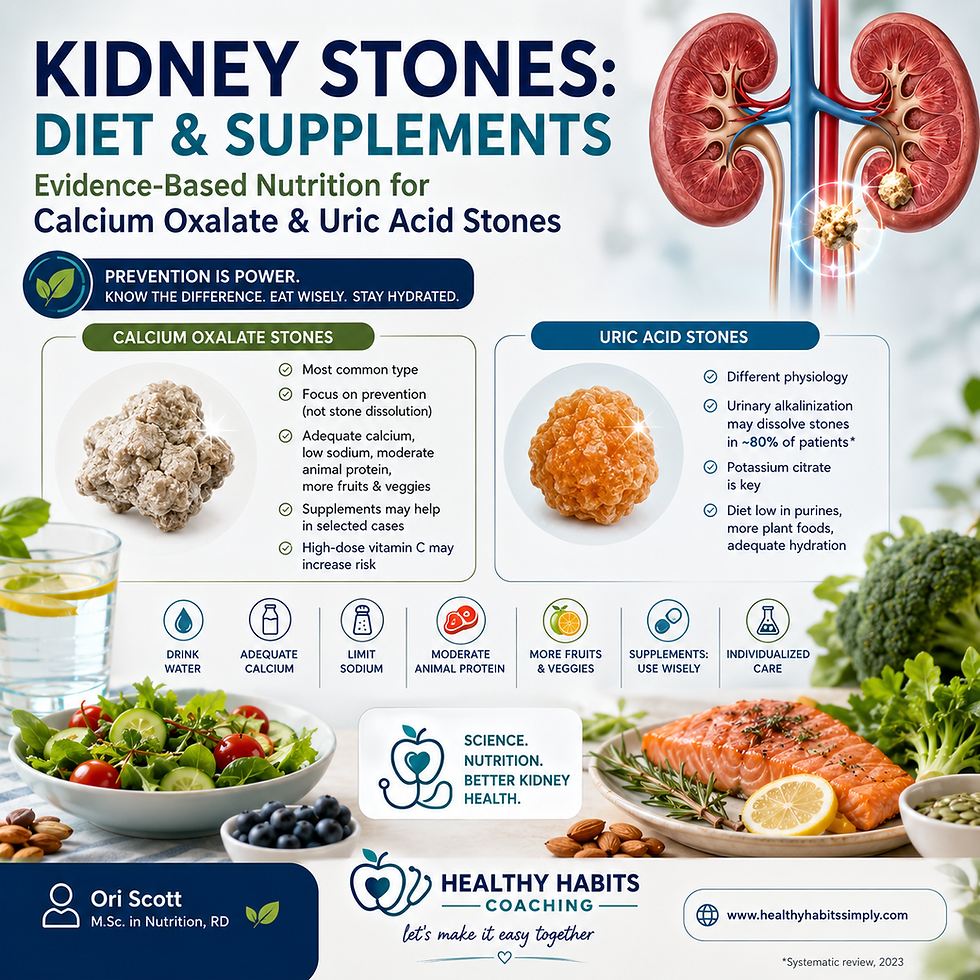
This narrative review evaluates recent evidence, published primarily between 2022 and 2026, concerning nutritional management and supplement-based approaches for calcium oxalate and uric acid stones. Recent umbrella and systematic reviews support increased water intake, avoidance of low-calcium diets, moderation of sodium and excessive animal-protein intake, and dietary patterns emphasizing fruits, vegetables, and minimally processed foods. Potassium citrate has the strongest evidence among adjunctive therapies, particularly for patients with hypocitraturia and for urinary alkalinization. Uric acid stones are unusual among common kidney stones because appropriately monitored alkalinization can result in actual stone dissolution. A 2023 systematic review involving 1,075 patients reported complete or partial dissolution in approximately 80% of patients treated medically. By contrast, there is no comparable high-quality evidence that nutritional supplements reliably dissolve established calcium oxalate calculi.
Evidence concerning magnesium preparations, omega-3 fatty acids, probiotics, herbal products, and oxalate-degrading compounds remains heterogeneous and generally insufficient to support their routine use as stone-removing treatments. Probiotic interventions, in particular, have not consistently reduced urinary oxalate or clinical stone recurrence. High-dose vitamin C supplementation should be approached cautiously because a 2026 systematic review and meta-analysis demonstrated a significant increase in urinary oxalate.
The current evidence therefore supports individualized MNT integrated with metabolic evaluation, adequate hydration, appropriate dietary calcium, sodium and animal-protein moderation, reduction of excess fructose-containing beverages, and targeted use of alkali therapy where indicated. Supplements should complement rather than replace established medical and nutritional treatment.
Keywords: nephrolithiasis; kidney stones; calcium oxalate; uric acid; medical nutrition therapy; potassium citrate; urinary alkalinization; oxalate; dietary supplements; stone prevention.
1. Introduction
Nephrolithiasis is a multifactorial disease characterized by crystallization of urinary solutes under conditions of supersaturation. Stone recurrence is clinically important because recurrent episodes can result in pain, obstruction, urinary tract infection, repeated urological procedures, and, in selected patients, impairment of kidney function.
Recent evidence emphasizes that nephrolithiasis should not be considered simply the consequence of consuming an isolated "stone-forming food." Rather, risk emerges from the interaction between urine volume, urinary calcium, oxalate, citrate, uric acid, sodium, urinary pH, metabolic disease, intestinal absorption, genetic susceptibility, medications, and overall dietary pattern.
An umbrella review published in 2024 evaluated 17 meta-analyses covering 46 potential risk factors and identified higher body mass index, central adiposity, dietary sodium and fructose exposure among factors associated with nephrolithiasis, while dietary calcium and DASH-type dietary patterns were associated with a more favorable risk profile. A separate 2025 umbrella review of randomized-trial meta-analyses found strong evidence supporting selected medical interventions, including potassium citrate for reduction of recurrent nephrolithiasis.
The nutritional management of calcium oxalate and uric acid nephrolithiasis nevertheless differs substantially. Calcium oxalate management principally aims to reduce urinary supersaturation and recurrence, while confirmed uric acid calculi can frequently undergo medical dissolution through appropriately monitored urinary alkalinization. This distinction is particularly important when evaluating claims regarding supplements marketed for "kidney stone removal."
2. Methods of the Narrative Review
A focused narrative literature assessment was conducted with priority given to PubMed/MEDLINE-indexed umbrella reviews, systematic reviews, and meta-analyses published during the preceding five years, principally 2022–2026. Searches used combinations of concepts corresponding to the MeSH terminology Nephrolithiasis, Kidney Calculi, Calcium Oxalate, Uric Acid, Diet, Nutrition Therapy, Potassium Citrate, Dietary Supplements, Oxalates, Probiotics, and Urinary Alkalization.
Preference was given to reviews that searched multiple recognized biomedical databases, including MEDLINE/PubMed, Embase, Scopus, Web of Science, and the Cochrane Library, and to analyses applying PRISMA, AMSTAR-2, Cochrane risk-of-bias methods or GRADE-style evidence evaluation. Recent primary research was used only when necessary to clarify an area not adequately covered by systematic reviews.
Because this is a narrative rather than a formally registered systematic review, the literature selection should not be interpreted as an exhaustive meta-analysis.
3. Calcium Oxalate Nephrolithiasis
3.1 Pathophysiological Basis for Nutrition Therapy
Calcium oxalate crystallization depends principally on urinary supersaturation with calcium and oxalate and is modified by endogenous inhibitors such as citrate. Hypercalciuria, hyperoxaluria, hypocitraturia and low urine volume are therefore clinically relevant abnormalities.
Dietary calcium and dietary oxalate interact within the gastrointestinal tract. Calcium consumed with meals can bind dietary oxalate in the intestinal lumen, reducing the fraction available for intestinal absorption. Consequently, indiscriminate restriction of calcium is physiologically counterproductive and is not supported by contemporary evidence.
The most recent comprehensive systematic review of recurrent nephrolithiasis found that, for adults with calcium-containing stones, increased water intake and a dietary pattern containing normal-to-high calcium with lower sodium and lower protein intake may reduce recurrence, although the overall strength of evidence remains low because much of the available randomized evidence is relatively old and heterogeneous.
3.2 Fluid and Urine Volume
Increasing urine volume decreases the concentration of lithogenic solutes and therefore reduces urinary supersaturation. Current systematic evidence continues to identify increased water intake as one of the most reproducible non-pharmacological measures for recurrent stone prevention.
From an MNT perspective, fluid prescription should be individualized rather than expressed solely as a fixed volume of beverages. Climate, exercise, occupational heat exposure, gastrointestinal losses, heart failure, advanced chronic kidney disease and medications can substantially modify appropriate intake.
For patients without a medical reason to restrict fluids, intake should be distributed throughout the day rather than concentrated into a short period. Additional fluid is particularly relevant during physical activity, hot-weather exposure, fever or increased sweating.
Water should form the principal fluid source. Sugar-sweetened beverages should not be used to meet hydration targets because recent umbrella-review evidence shows convincing associations between higher sugar-sweetened beverage consumption and nephrolithiasis as well as higher serum uric acid concentrations.
3.3 Dietary Calcium: Restriction Is Not the Goal
One of the most clinically important misconceptions in calcium oxalate nephrolithiasis is that calcium-containing foods should routinely be eliminated.
Recent umbrella evidence does not support dietary calcium restriction as a stone-prevention strategy; dietary calcium may instead have a protective association. The updated systematic review of recurrent nephrolithiasis similarly concluded that a normal-to-high-calcium diet combined with lower sodium and protein intake may reduce recurrence relative to a low-calcium approach.
The practical nutritional principle is therefore to obtain calcium primarily from normal dietary sources and to consume calcium-containing foods alongside meals containing oxalate.
Calcium supplementation requires greater individualization. Supplemental calcium taken separately from food does not necessarily reproduce the intestinal oxalate-binding effect of calcium consumed with a meal. Supplements should therefore not automatically be prescribed solely because a patient forms calcium stones, nor should medically indicated calcium be automatically discontinued without considering osteoporosis and overall bone health.
3.4 Dietary Oxalate
For patients with documented hyperoxaluria or recurrent calcium oxalate stones, reducing excessive exposure to highly concentrated oxalate sources is physiologically reasonable. However, this should not become an unnecessarily restrictive "zero-oxalate diet."
Foods contain widely differing oxalate concentrations and bioavailability, and intestinal oxalate absorption is influenced by accompanying calcium, gastrointestinal disease and the intestinal microbiome.
A clinically rational strategy therefore consists of reducing unusually large quantities of high-oxalate foods while maintaining normal dietary calcium with meals. Patients with enteric hyperoxaluria, inflammatory intestinal disease, pancreatic disease, chronic fat malabsorption or a history of malabsorptive bariatric surgery require more specialized nutritional management because intestinal oxalate absorption can be substantially increased in these settings.
3.5 Sodium
Higher sodium exposure contributes to a dietary environment favoring calcium stone formation and was identified as a suggestive causal risk factor in the 2024 umbrella review of nephrolithiasis risk factors.
Sodium restriction should therefore focus on the major sources of excessive exposure: highly processed foods, restaurant foods, cured meats, salty snacks, instant foods and heavily salted sauces rather than simply eliminating salt used during home cooking.
Lower sodium intake is particularly relevant in patients with hypercalciuria, hypertension or cardiovascular disease.
3.6 Animal Protein and Purine-Rich Foods
The relationship between protein and nephrolithiasis is more nuanced than the statement that "protein causes stones." A 2022 systematic review and dose-response meta-analysis evaluated total and animal protein intake and different animal protein sources and found that the association differs according to protein source and study characteristics.
A 2023 umbrella review examining protein intake and kidney outcomes likewise concluded that the certainty of evidence linking higher protein intake with urolithiasis is limited and heterogeneous.
Consequently, extreme protein restriction cannot be recommended universally. A more defensible strategy is avoidance of chronically excessive animal-protein intake while obtaining a larger proportion of protein from plant foods and tailoring total protein intake to age, muscle status, kidney function and overall metabolic health.
This approach is especially relevant when hyperuricosuria coexists with calcium oxalate nephrolithiasis.
3.7 Dietary Pattern Rather Than Individual Nutrients
The 2024 umbrella review found a protective tendency associated with DASH-style dietary patterns. Such patterns emphasize vegetables, fruits, legumes, whole grains and appropriate dairy intake while limiting excessive sodium, processed foods and large quantities of red or processed meat.
This type of dietary pattern is conceptually attractive for nephrolithiasis because it simultaneously increases potassium-rich plant foods and dietary alkali while decreasing sodium density and excessive animal-protein exposure.
A DASH approach should nevertheless be individualized in patients with advanced chronic kidney disease or hyperkalemia, in whom unrestricted intake of potassium-rich foods may not be safe.
4. Uric Acid Nephrolithiasis
4.1 Distinct Pathophysiology
Uric acid stones differ fundamentally from calcium oxalate stones because urinary acidity is a dominant determinant of uric acid crystallization.
Persistent low urinary pH promotes conversion of soluble urate to poorly soluble undissociated uric acid. Consequently, a patient can develop uric acid stones even without extremely high urinary uric acid excretion.
Uric acid stone disease is strongly associated with insulin resistance and cardiometabolic disease. This relationship provides a rationale for integrating nephrolithiasis therapy with management of obesity, type 2 diabetes, metabolic syndrome and dietary quality.
4.2 Medical Nutrition Therapy for Uric Acid Stones
Hydration
As with calcium oxalate disease, increased urine volume lowers urinary concentration and remains foundational. Water should provide the majority of fluid.
Dietary acid load and animal protein
Large quantities of meat and other purine-rich animal products can increase the uric acid burden and contribute to dietary acid load. Moderate rather than extreme restriction is appropriate for most patients, with particular attention to those with hyperuricosuria or gout.
Fruits and vegetables
Plant-forward eating increases dietary alkali and is generally compatible with the metabolic objectives of uric acid stone prevention. The DASH dietary pattern is particularly relevant because a 2023 systematic review and meta-analysis of randomized trials found that DASH interventions modestly but significantly reduced serum uric acid concentrations.
This does not demonstrate that DASH alone dissolves stones. Rather, it supports use of a metabolically favorable dietary pattern as part of long-term prevention.
Fructose and sugar-sweetened beverages
Fructose metabolism can increase uric acid production, particularly when added sugars contribute excess energy intake. The 2024 umbrella review of sugar-sweetened beverages found convincing evidence linking greater intake with both nephrolithiasis and higher uric acid concentrations.
Reducing sugar-sweetened beverages is therefore justified for both stone prevention and broader cardiometabolic health.
5. Can Kidney Stones Be Dissolved With Supplements?
The answer depends entirely on stone composition.
Uric acid stones: yes, medical chemolysis is possible
Uric acid stones can frequently be dissolved through controlled urinary alkalinization.
A 2023 systematic review following PRISMA and Cochrane methodology included 1,075 patients receiving dissolution therapy for uric acid calculi. Complete or partial dissolution occurred in 80.5%, including complete dissolution in approximately 61.7%. Approximately 15.7% ultimately required surgical intervention.
A contemporary 2024 clinical series also reported high rates of successful chemolysis with potassium citrate when urinary pH was regularly monitored, although this was not a randomized trial and should therefore be interpreted as supportive rather than definitive evidence.
Thus, alkali therapy is not merely a nutritional supplement strategy: it constitutes medical dissolution therapy and requires supervision.
Calcium oxalate stones: no established oral dissolution therapy
The situation is different for calcium oxalate. Current evidence does not demonstrate that potassium citrate, magnesium, probiotics, herbs, lemon preparations or commercially marketed "stone-breaking" supplements can reliably dissolve established calcium oxalate calculi.
Potassium citrate may reduce recurrence and improve unfavorable urinary chemistry, but prevention must not be confused with dissolution.
Patients with obstructing, symptomatic, enlarging or otherwise clinically significant calcium stones may require expectant management, medical expulsive therapy where appropriate, extracorporeal shock-wave lithotripsy, ureteroscopy or other urological treatment depending on stone size, location and clinical circumstances.
6. Potassium Citrate
Among nutritional-pharmacological adjuncts, potassium citrate has the most clinically meaningful evidence.
Citrate can bind urinary calcium, thereby reducing the amount available to form calcium oxalate crystals. It is particularly relevant in hypocitraturia. Its alkalinizing action is central to the treatment of uric acid nephrolithiasis.
The 2025 umbrella review of meta-analyses of randomized controlled trials reported a substantial reduction in nephrolithiasis recurrence with potassium citrate and classified the supporting evidence as high certainty within that review framework.
The 2026 systematic review of recurrent nephrolithiasis also concluded that alkali therapy may reduce recurrence among adults with calcium-containing stones, although it graded the overall strength of evidence as low because of limitations of the underlying trials.
These apparently different certainty ratings illustrate an important issue: conclusions depend on which studies are included and how certainty is graded. The direction of evidence nevertheless consistently favors citrate in appropriately selected recurrent stone formers.
Potassium citrate requires medical oversight because it may be inappropriate or hazardous in patients with substantial hyperkalemia risk, advanced renal impairment or use of medications that significantly impair renal potassium excretion.
Excessive urinary alkalinization can also shift urinary chemistry toward calcium phosphate crystallization; therefore, empiric indefinite supplementation without monitoring is not optimal.
7. Magnesium
Magnesium can complex with oxalate and has biologically plausible effects on calcium oxalate crystallization. A 2025 systematic review of pharmacological, complementary and alternative approaches reported that magnesium citrate improved selected urinary risk factors in some studies.
However, modification of a urinary biomarker is not equivalent to demonstrating lower clinical stone recurrence, and the evidence is insufficient to recommend universal magnesium supplementation to all calcium oxalate stone formers.
Magnesium supplementation may be reasonable in selected patients when dietary intake is inadequate or a specific metabolic indication exists, but it should not be presented as a proven method of dissolving calcium oxalate calculi.
Renal function must also be considered because magnesium accumulation can occur in advanced kidney impairment.
8. Vitamin C
Vitamin C supplementation deserves particular attention because supplemental ascorbic acid can be metabolized to oxalate.
A 2026 systematic review and meta-analysis of nine interventional studies found that vitamin C supplementation significantly increased 24-hour urinary oxalate compared both with baseline and placebo. The pooled increase compared with baseline was approximately 9.7 mg/24 hours, and urinary oxalate also increased significantly relative to placebo.
The effect occurred in both stone formers and non-stone formers.
Consequently, high-dose vitamin C supplements should not be promoted for calcium oxalate stone prevention and may be particularly undesirable in patients with hyperoxaluria or recurrent calcium oxalate nephrolithiasis.
This evidence refers to concentrated supplemental vitamin C and should not be interpreted as an indication to avoid normal consumption of fruits and vegetables.
9. Probiotics and Oxalate-Degrading Bacteria
The intestinal microbiome has generated substantial research interest because organisms including Oxalobacter formigenes, Lactobacillus spp. and Bifidobacterium spp. can influence oxalate metabolism.
Biological plausibility, however, has not yet translated into reliable clinical efficacy.
A 2025 systematic review evaluating probiotic and synbiotic interventions identified nine studies, including five randomized trials. Across studies, probiotic treatment did not consistently reduce urinary oxalate, and no included study demonstrated a significant reduction in clinically confirmed stone recurrence.
Earlier systematic work had suggested possible benefit, particularly from experimental and preclinical studies, but clinical findings remained heterogeneous.
Current evidence therefore does not justify routine probiotic supplementation specifically to prevent or dissolve calcium oxalate stones.
10. Omega-3 Fatty Acids and Other Experimental Supplements
The 2025 systematic review of complementary and alternative approaches identified several interventions that altered urinary risk factors or stone outcomes in individual studies, including magnesium citrate, eicosapentaenoic acid and experimental oxalate-degrading enzymes.
These findings are hypothesis-generating rather than sufficient for routine clinical recommendations because studies were generally small, interventions differed substantially and long-term recurrence outcomes were inconsistently reported.
The same caution applies to phytochemicals and herbal preparations marketed for nephrolithiasis. In vitro inhibition of calcium oxalate crystallization or reduction of stones in animal models cannot be assumed to provide clinically meaningful dissolution in humans.
Until replicated controlled trials demonstrate reduction in symptomatic or radiologically confirmed recurrence, these agents should remain investigational.
11. Calcium and Vitamin D Supplements
The relationship between calcium and vitamin D supplementation and nephrolithiasis is complex.
The 2024 umbrella analysis did not demonstrate a simple uniform association in which all calcium or vitamin D exposure increases nephrolithiasis risk. Likewise, the 2025 umbrella review found calcium and vitamin D supplementation ineffective as primary stone-prevention interventions, rather than establishing them as treatments.
The practical implication is that calcium or vitamin D should not be prescribed for the purpose of preventing stones unless another clinical indication exists. Conversely, a patient with osteoporosis should not automatically discontinue medically indicated therapy solely because of nephrolithiasis without individualized assessment.
For calcium supplementation, timing with meals may be relevant to intestinal oxalate binding.
12. Recommended Medical Nutrition Therapy Framework
MNT should be based on confirmed or probable stone composition, clinical history and metabolic evaluation rather than a universal "kidney stone diet."
For recurrent calcium oxalate stone formers, the most evidence-supported pattern consists of adequate hydration, normal dietary calcium rather than calcium restriction, reduction of excessive sodium, avoidance of excessive animal-protein intake, reduction of very high oxalate exposure when hyperoxaluria is present, avoidance of unnecessary high-dose vitamin C supplementation, and increased use of fruits, vegetables, legumes and minimally processed foods.
For uric acid stone formers, adequate hydration should be combined with reduction of excessive animal-purine intake and sugar-sweetened beverages, improvement in overall metabolic health and, when clinically indicated, pharmacologic urinary alkalinization. A DASH-like dietary pattern is reasonable and additionally has evidence for modest reduction in serum uric acid.
A 24-hour urine assessment can provide clinically useful information regarding urine volume, calcium, oxalate, citrate, sodium, uric acid and other relevant parameters, although a 2025 systematic review demonstrated substantial methodological variability in collection and reporting practices. Results should therefore be interpreted within the laboratory and clinical context.
13. Safety and Situations Requiring Medical or Urological Assessment
Nutrition therapy and supplements must not delay treatment of potentially complicated nephrolithiasis. Immediate medical evaluation is necessary when kidney stones are associated with fever or suspected infection, persistent vomiting or dehydration, inability to urinate, uncontrolled pain, acute deterioration of kidney function, obstruction of a solitary functioning kidney or other evidence of clinically important obstruction.
Potassium citrate and other potassium-containing preparations require particular caution in advanced kidney disease or in patients at increased risk for hyperkalemia.
Similarly, aggressive fluid prescriptions may be inappropriate in patients with conditions requiring fluid restriction.
Supplements should therefore be selected according to stone phenotype, kidney function, medications and metabolic abnormalities rather than used empirically.
14. Evidence Summary
Intervention | Calcium oxalate prevention | Uric acid prevention | Established stone dissolution |
Increased water intake | Supported | Supported | No direct dissolution effect |
Normal dietary calcium | Supported; avoid routine restriction | Neutral/individualized | No |
Lower excessive sodium | Supported | Metabolically reasonable | No |
Moderate excessive animal protein | Supported as part of dietary pattern | Particularly relevant | No |
Reduce sugar-sweetened beverages | Supported | Particularly relevant | No |
Potassium citrate | Supported in selected recurrent/hypocitraturic patients | Strongly supported | Yes, for uric acid stones |
Magnesium | Possible benefit; evidence insufficient for universal use | Limited evidence | No established effect |
High-dose vitamin C | Potentially harmful due to increased urinary oxalate | No therapeutic role | No |
Probiotics/oxalate-degrading bacteria | Insufficient clinical evidence | Not established | No |
Omega-3/EPA | Preliminary evidence only | Not established | No |
Herbal stone-removal preparations | Insufficient evidence | Insufficient evidence | Not established |
15. Discussion
The most important finding from contemporary evidence is that medical nutrition therapy should be directed toward urinary physiology rather than food prohibition.
For calcium oxalate stones, maintaining dietary calcium while reducing excessive sodium and improving dietary quality represents a more evidence-consistent approach than simultaneously restricting calcium and oxalate-rich plant foods. An excessively restrictive diet can reduce nutritional adequacy without necessarily improving urinary supersaturation.
Supplement research remains substantially weaker than marketing claims suggest. Potassium citrate is the principal exception because citrate therapy has a defined biochemical mechanism and clinically demonstrated efficacy in recurrent nephrolithiasis. In confirmed uric acid disease, alkalinization is especially important because modification of urinary pH can convert poorly soluble uric acid to the more soluble urate form, permitting chemolysis.
Calcium oxalate stones do not behave similarly. No dietary supplement currently supported by systematic-review evidence can be described as a reliable oral calcium oxalate stone-dissolving agent.
The evidence for probiotics illustrates the distinction between biological plausibility and clinical effectiveness. Although oxalate-degrading intestinal bacteria may influence oxalate handling, randomized studies have not shown consistent reduction of urinary oxalate or recurrence.
Another clinically important finding concerns vitamin C. Supplemental vitamin C is commonly perceived as harmless, but the 2026 meta-analysis indicates that it significantly increases urinary oxalate. This reinforces the principle that supplementation should not automatically be equated with nutritional benefit in stone formers.
Finally, metabolic health deserves greater attention. Uric acid nephrolithiasis is closely connected to insulin resistance and metabolic disease, and central obesity, type 2 diabetes and dietary fructose are among the factors associated with nephrolithiasis in recent umbrella-level evidence. Thus, long-term stone management should incorporate overall cardiometabolic nutrition rather than focusing exclusively on urine chemistry.
Conclusion
Recent systematic and umbrella-review evidence supports medical nutrition therapy as a fundamental component of prevention for both calcium oxalate and uric acid nephrolithiasis, but therapy must be adapted to stone composition.
For calcium oxalate stone formers, the strongest nutritional approach is adequate hydration, maintenance of normal dietary calcium, reduction of excessive sodium, avoidance of excessive animal-protein intake, targeted reduction of high oxalate exposure when hyperoxaluria is documented, and adoption of a high-quality dietary pattern rich in minimally processed plant foods. Routine calcium restriction is not supported.
Potassium citrate is the best-supported adjunctive therapy for selected calcium stone formers, particularly those with hypocitraturia, but it should be medically supervised. Magnesium and several experimental agents may modify selected urinary risk factors, but evidence is currently inadequate to recommend them universally. Probiotic therapy has not consistently reduced urinary oxalate or stone recurrence. High-dose vitamin C supplementation is potentially counterproductive because it significantly increases urinary oxalate.
Uric acid nephrolithiasis is clinically distinct. Increasing urine volume, reducing excessive animal-purine and sugar-sweetened beverage exposure, improving cardiometabolic health and increasing dietary alkali are appropriate nutritional strategies. Most importantly, confirmed uric acid calculi can often be medically dissolved through monitored urinary alkalinization, most commonly with potassium citrate. A recent systematic review reported complete or partial dissolution in approximately four of five treated patients, although evidence quality and treatment protocols remain heterogeneous.
No comparable evidence demonstrates reliable oral dissolution of established calcium oxalate stones. Therefore, commercial supplements advertised as broadly capable of “removing” or “dissolving” calcium oxalate kidney stones should not be considered evidence-based therapy.
The optimal contemporary strategy is an individualized combination of stone analysis, metabolic evaluation, medical nutrition therapy, hydration, appropriately selected pharmacologic treatment and urological intervention when clinically required.
Bibliography
Veronese N, Ciriminna S, Errera CM, et al. Preventing and treating kidney stones: an umbrella review of meta-analyses of non-surgical randomized controlled trials. Minerva Urol Nephrol. 2025;77(4):472-478. doi:10.23736/S2724-6051.25.06296-2. PMID: 40891477.
Ong A, Brown G, Tokas T, Hameed BMZ, Philip J, Somani BK. Selection and outcomes for dissolution therapy in uric acid stones: a systematic review of literature. Curr Urol Rep. 2023;24(8):355-363. doi:10.1007/s11934-023-01164-7. PMID: 37079196.
Lo CYZ, Khor QH, Abdullatif VA, et al. Systematic review of pharmacological, complementary, and alternative therapies for the prevention of calcium oxalate stones. Arab J Urol. 2025;12(2):169-188. doi:10.1016/j.ajur.2024.04.006. PMID: 40458577.
Farkouh A, Seibly E, Buell MI, Jhang D, Amasyali AS, Okhunov Z, Baldwin DD. The effect of vitamin C supplements on urinary stone risk: a systematic review and meta-analysis. J Endourol. 2026. Online ahead of print. doi:10.1177/08927790261471733. PMID: 42535313.
Remer T, Kalotai N, Amini MA, et al. Protein intake and risk of urolithiasis and kidney diseases: an umbrella review of systematic reviews for the evidence-based guideline of the German Nutrition Society. Eur J Nutr. 2023;62(5):1957-1975. doi:10.1007/s00394-023-03143-7. PMID: 37133532.
Al-related authors. Associations of total protein or animal protein intake and animal protein sources with risk of kidney stones: a systematic review and dose-response meta-analysis. Adv Nutr. 2022. doi:10.1093/advances/nmac013. PMID: 35179185.
Yang J, Li D, Li T, Jia B. Probiotics in the prevention and treatment of calcium oxalate kidney stones: mechanisms and therapeutic potential. Front Microbiol. 2025. doi:10.3389/fmicb.2025.1663138. PMID: 41113639.
Probiotic and synbiotic interventions targeting oxalate-degrading gut bacteria for the prevention of kidney stones: a systematic review. 2025. PMID: 41409368.
Taheri H, Feizabadi MM, Keikha R, Afkari R. Therapeutic effects of probiotics and herbal medications on oxalate nephrolithiasis: a mini systematic review. Iran J Microbiol. 2024;16(1):4-18. doi:10.18502/ijm.v16i1.14866. PMID: 38682062.
Risk factors for nephrolithiasis formation: an umbrella review. 2024. PMID: 38814276.
Sugar-sweetened beverages and adverse human health outcomes: an umbrella review of meta-analyses of observational studies. 2024. PMID: 39207876.
The effect of dietary approaches to stop hypertension and ketogenic diets intervention on serum uric acid concentration: a systematic review and meta-analysis of randomized controlled trials. 2023. PMID: 37380733.
Prevention of recurrent nephrolithiasis in adults and children: a systematic review. Ann Intern Med. 2026. doi:10.7326/ANNALS-25-04452. PMID: 41871357.
Pharmacotherapy for patients with calcium oxalate stones and abnormal urine chemistry: a systematic review and meta-analysis for the Japanese Clinical Practice Guidelines for the Management of Urinary Stones, Third Edition. 2024. PMID: 39415439.
Methodological variations in 24-hour urine collection for nephrolithiasis: a systematic review of reporting practices and clinical implications. 2025. PMID: 41468103.
Normand M, Haymann JP, Daudon M. Medical treatment of uric acid kidney stones. Can Urol Assoc J. 2024;18(11). doi:10.5489/cuaj.8774. PMID: 38976892.
Tsampoukas G, Hossain MF, Katsouri A, et al. Urine pH, citrate, and beyond: challenges of pharmaceutical stone management in daily urological practice. Arch Ital Urol Androl. 2025;97(2):13798. doi:10.4081/aiua.2025.13798. PMID: 40548885.


Comments